NCCR SPIN Annual Meeting 2026: science, innovation, and collaboration in Pontresina
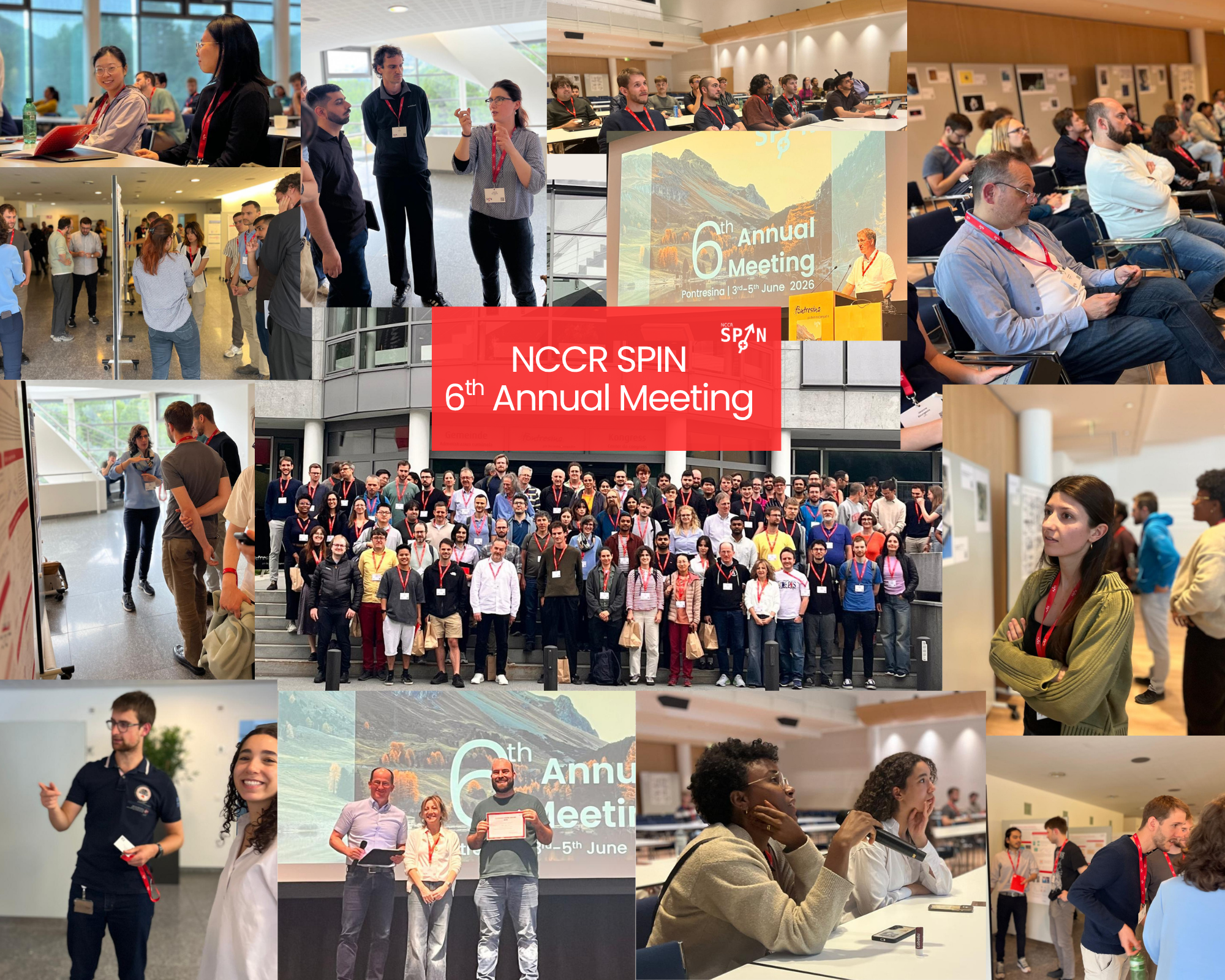
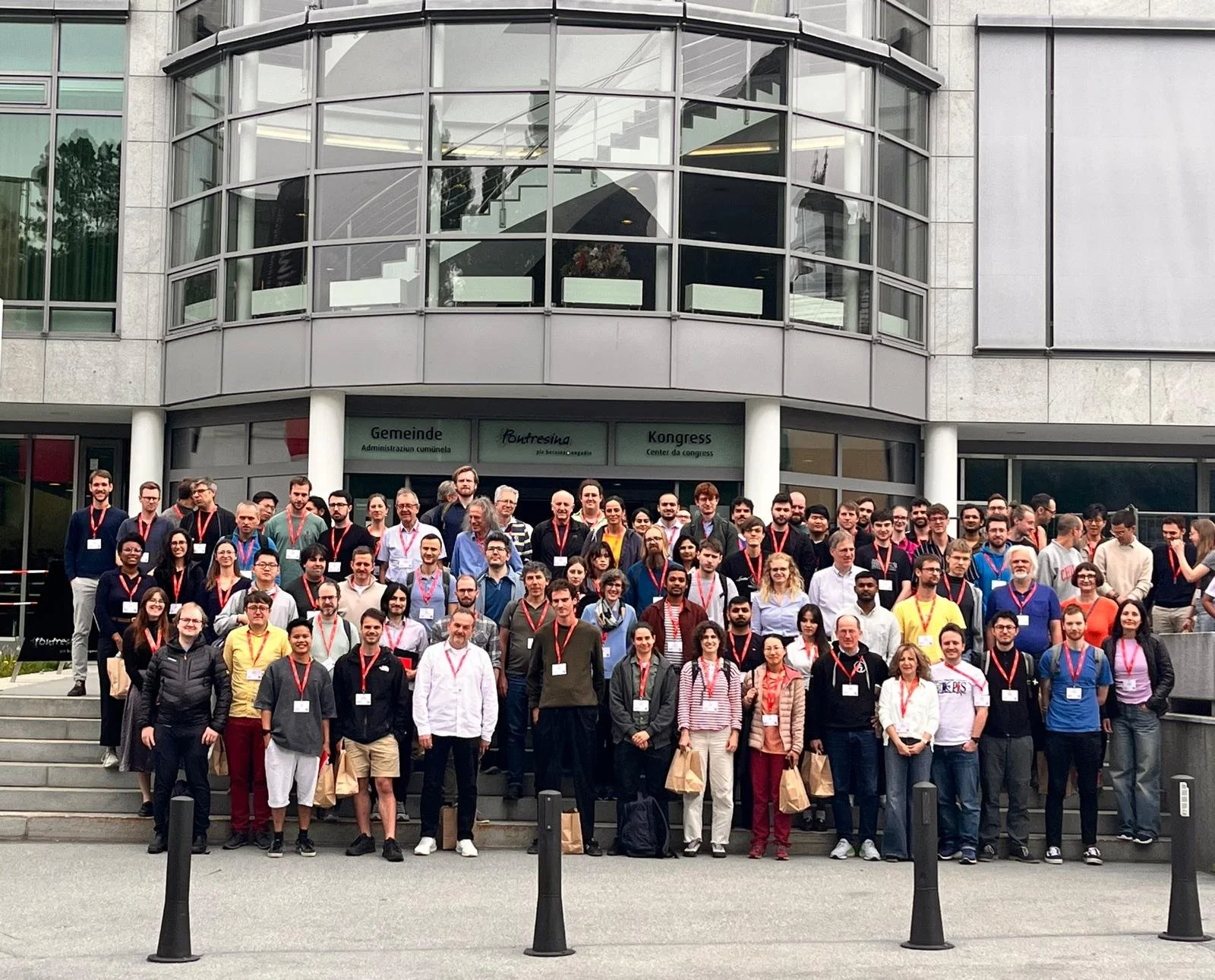
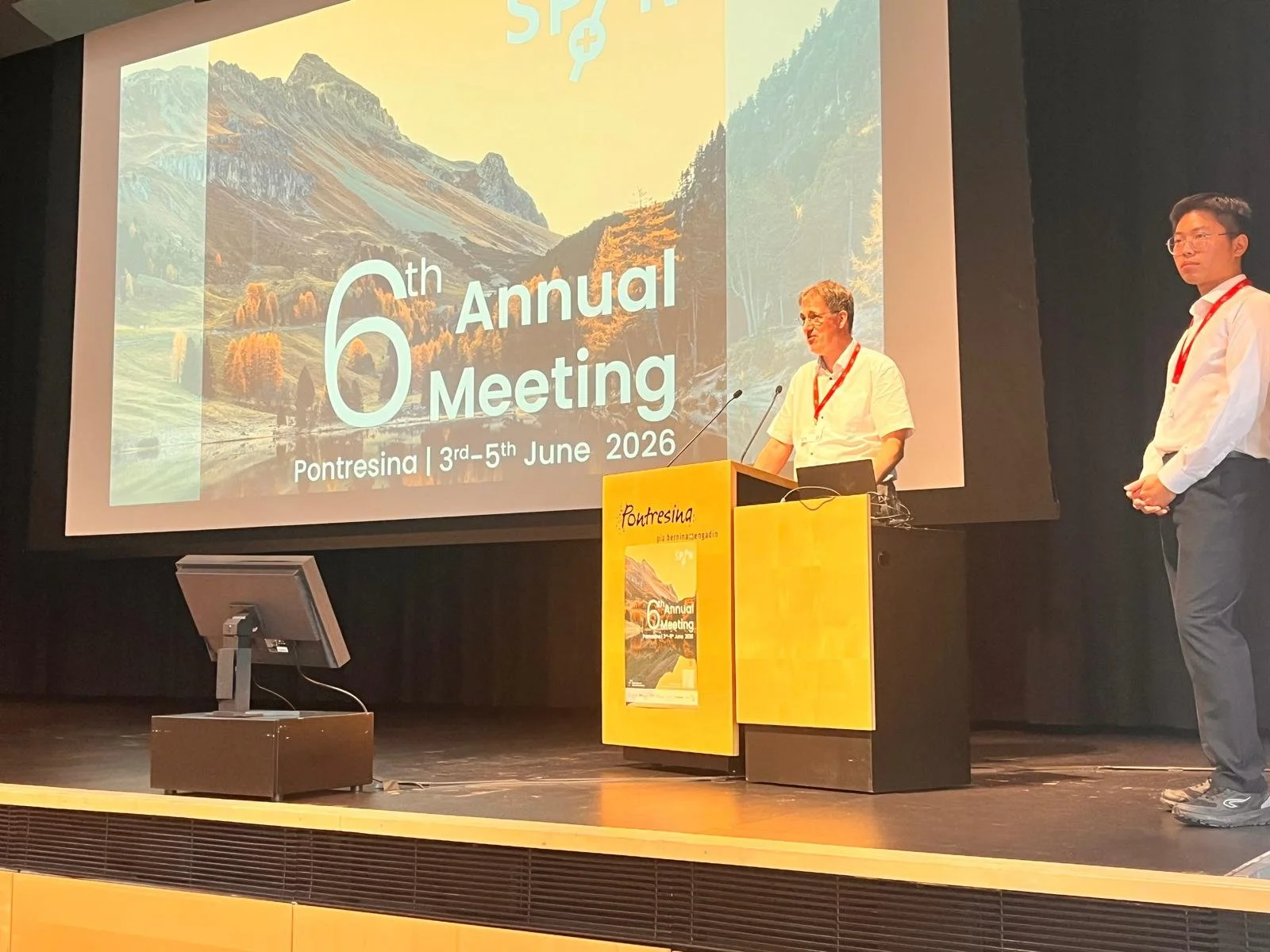
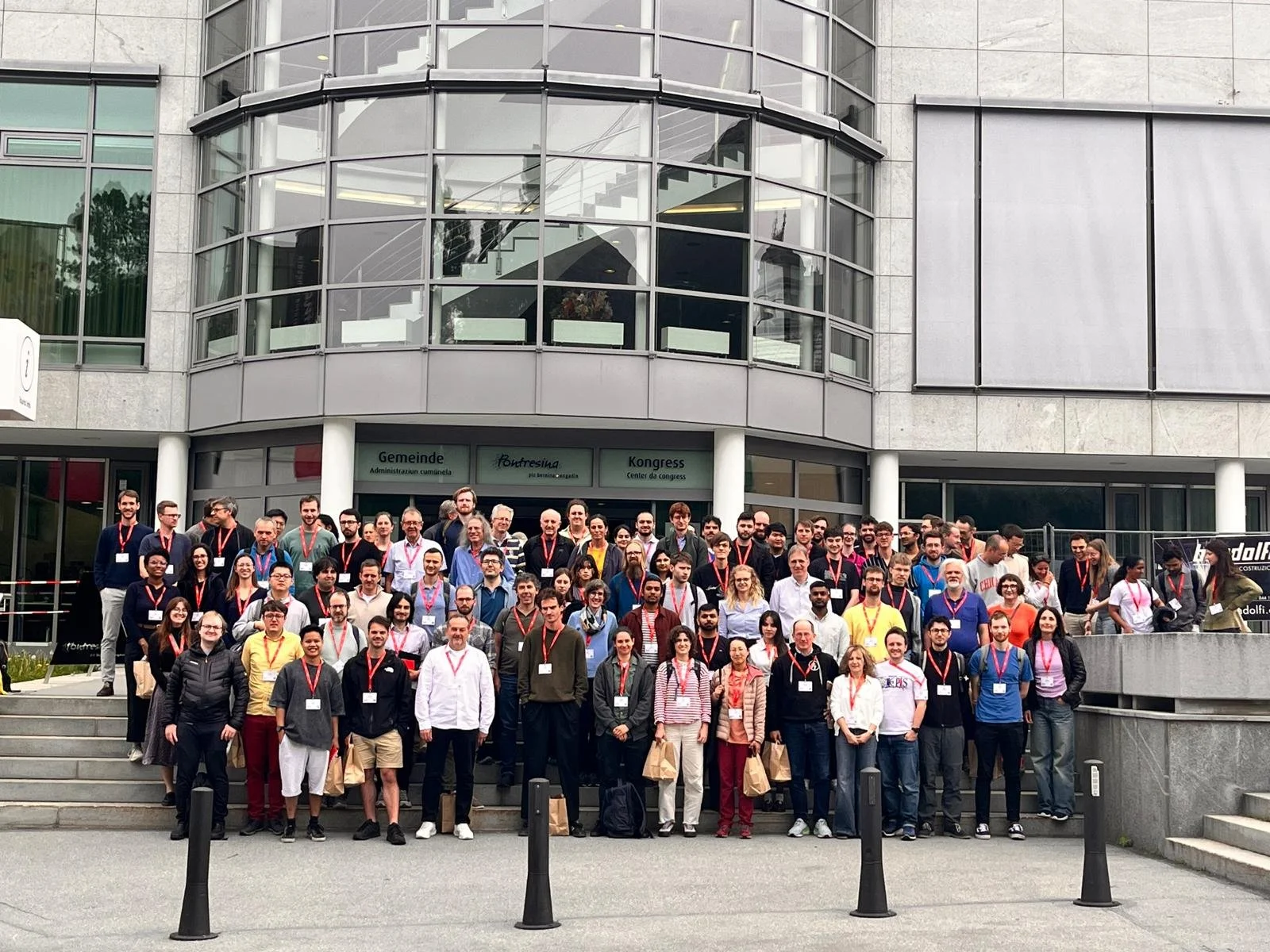
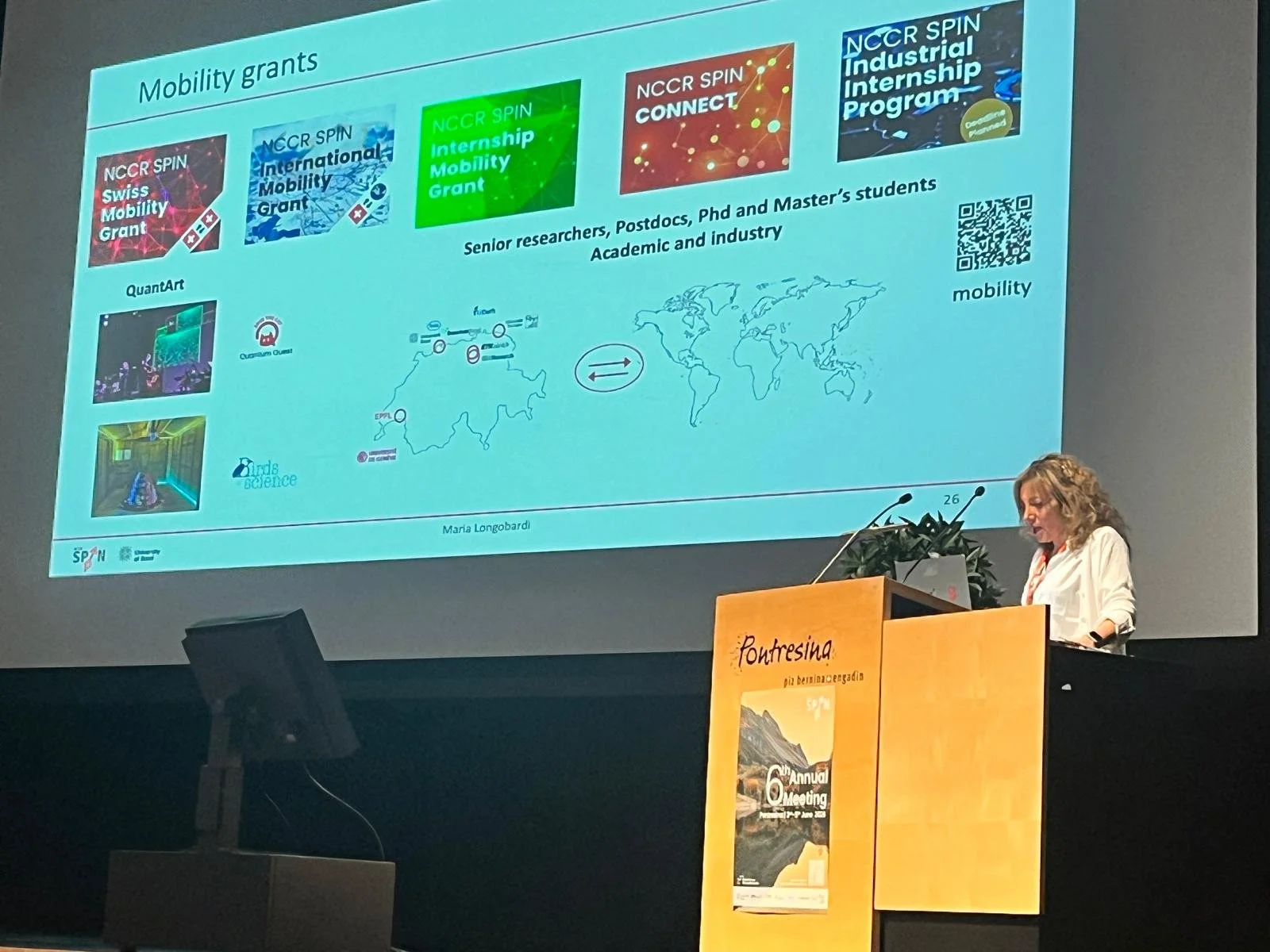
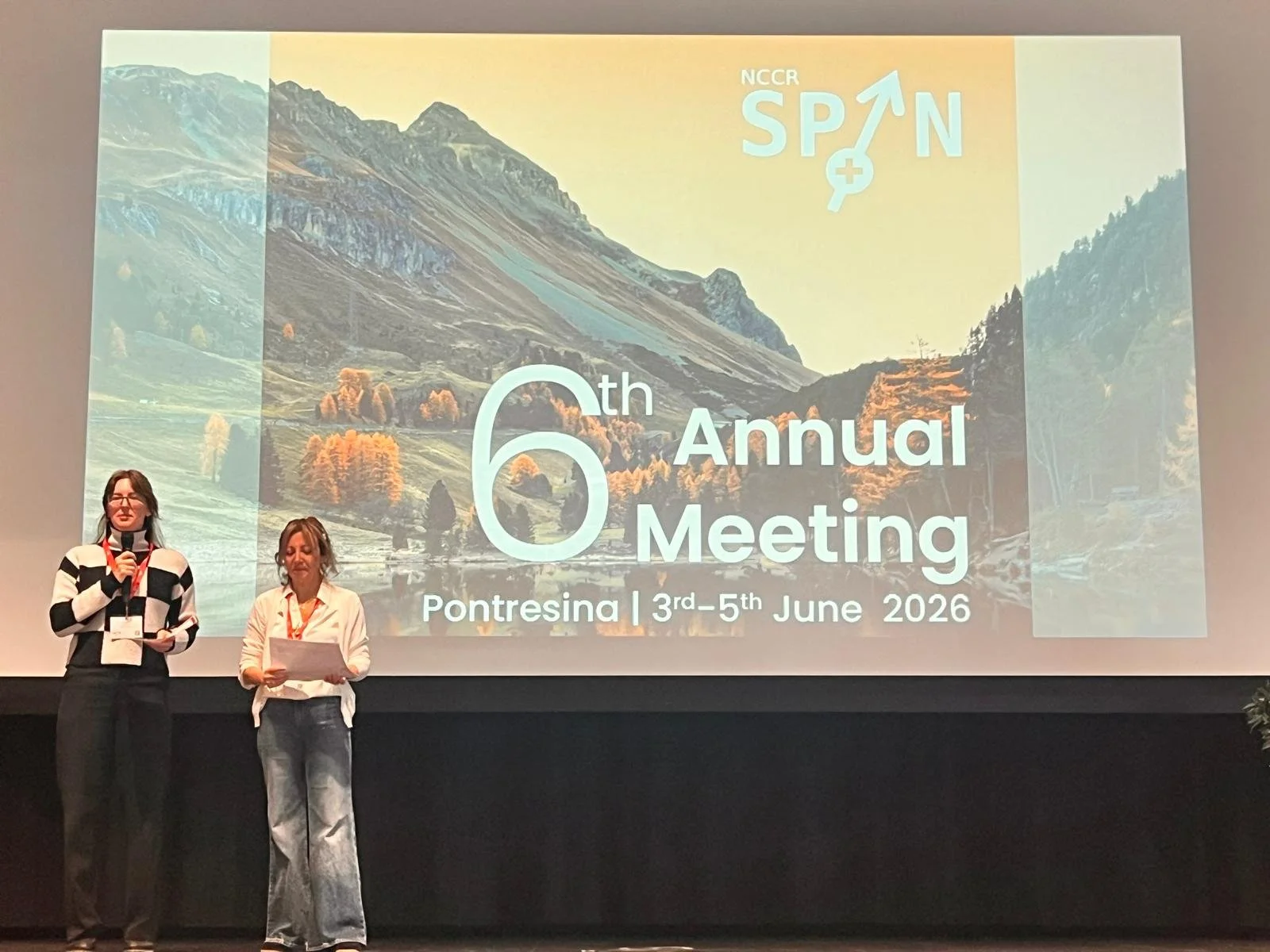
From June 3 to 5, 2026, the NCCR SPIN community gathered in the Swiss alpine village of Pontresina for its sixth Annual Meeting. Hosted at the Congress Center Rondo, the event brought together 120 participants from across the NCCR network for three days of scientific exchange, innovation, and community building. Researchers, students, industry partners, and entrepreneurs came together to share their latest results, discuss future directions in spin-based quantum computing, and strengthen collaborations across institutions and disciplines.
The Annual Meeting 2026 offered an impressive snapshot of the scientific progress being made across NCCR SPIN. From advances in spin qubit technologies and materials engineering to developments in quantum theory, sensing, and scalable architectures, the meeting highlighted the breadth and depth of research driving the field forward. Equally important were the opportunities for collaboration, mentorship, innovation, and community building that emerged throughout the three days in Pontresina.
Alongside the scientific presentations, the Annual Meeting continued to foster the strong sense of community that has become a hallmark of NCCR SPIN, especially for young researchers.
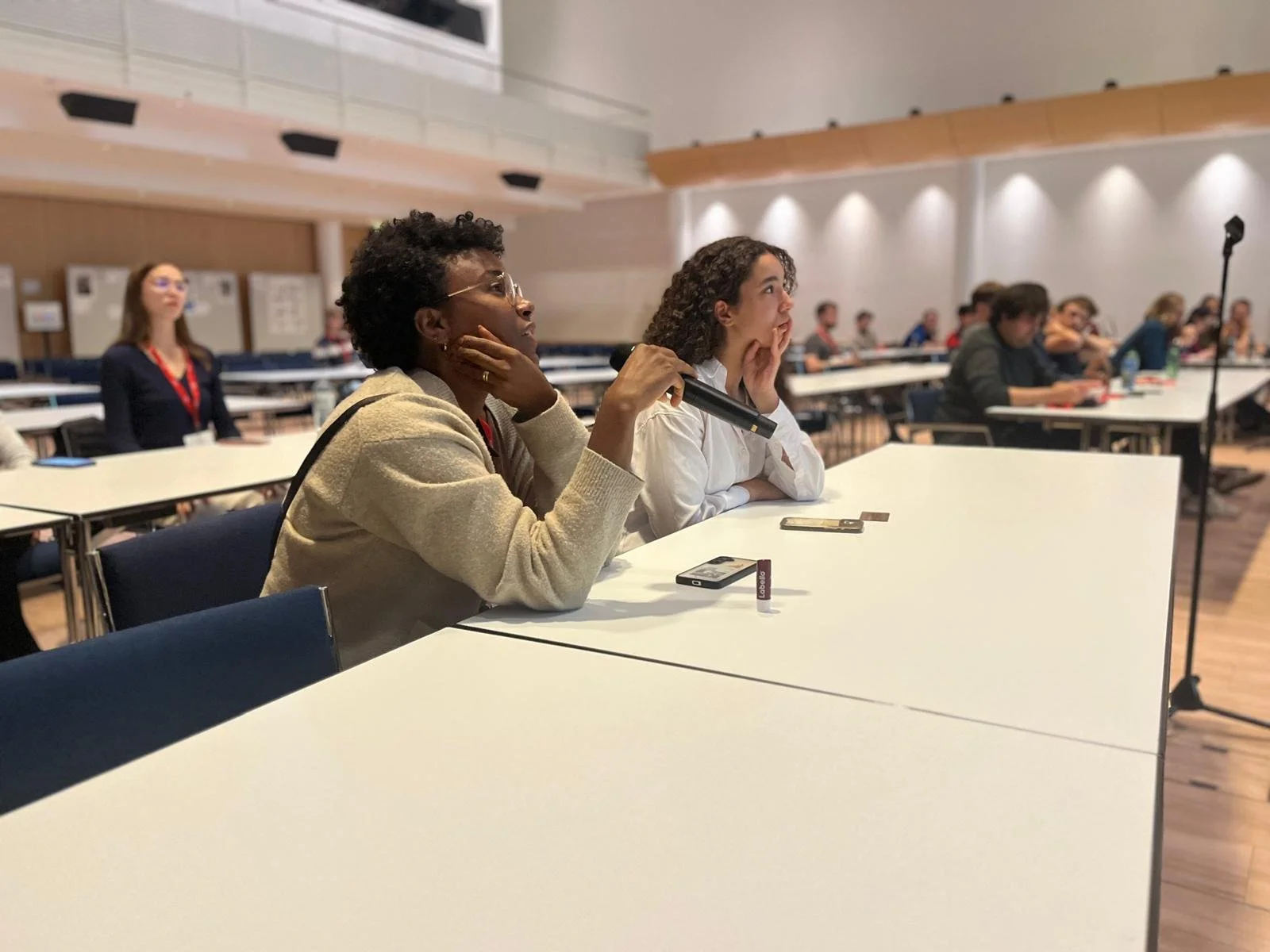
The QuId (Qubit Ideas) Forum assembly provided a dedicated venue for PhD students and postdocs to exchange ideas, discuss common challenges, and strengthen connections across institutions. By bringing together young researchers from diverse backgrounds and scientific topics, the meeting reinforced the importance of personal interaction and interdisciplinary exchange within the network.
A traditional highlight of the Annual Meeting was the excursion to the Engadin landscape. Participants enjoyed a short hike above Pontresina, taking in panoramic views of the surrounding mountains while continuing scientific discussions outside the conference venue. The excursion provided a welcome opportunity to connect across institutions and career stages in a relaxed setting.
The conference dinner and evening reception offered additional opportunities for informal discussions and networking. These moments remain an essential part of the Annual Meeting, often sparking new collaborations and conversations that continue long after the event.
With scientific insights exchanged, connections strengthened, and future projects inspired, the Annual Meeting 2026 demonstrated the vitality of the NCCR SPIN network and its commitment to scientific excellence, innovation, and collaboration.
Highlights from the Annual Meeting 2026:
Scientific program
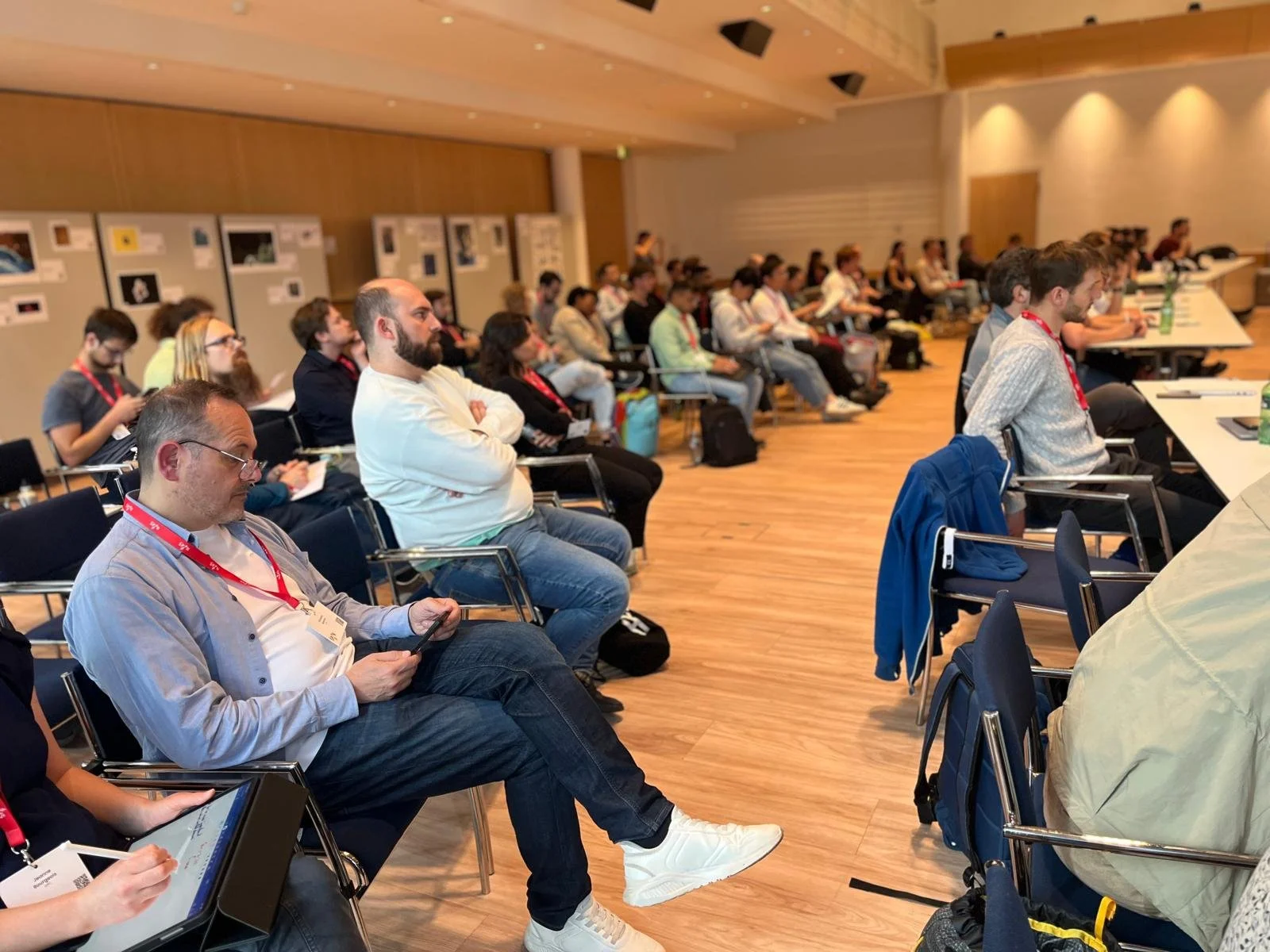
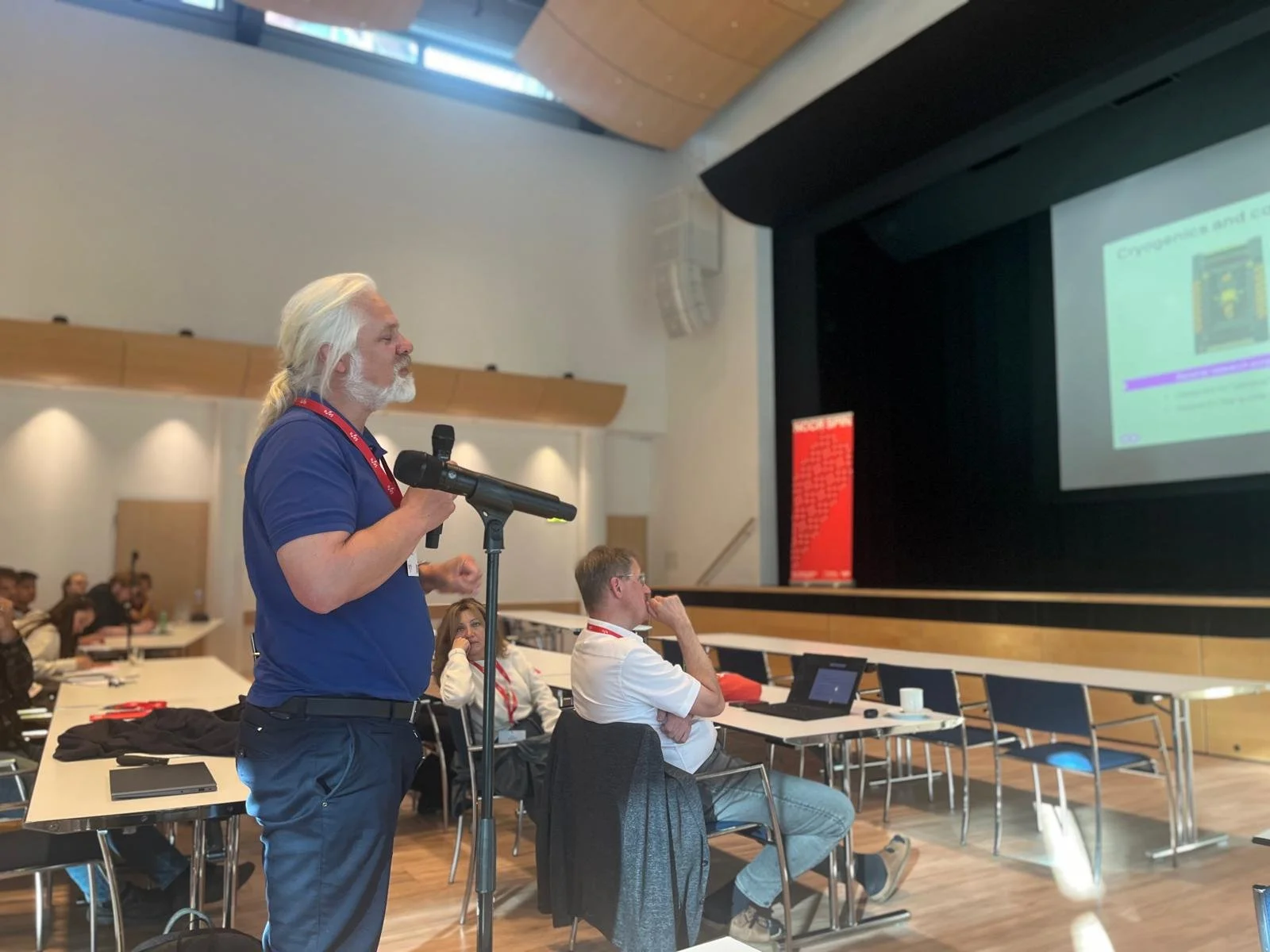
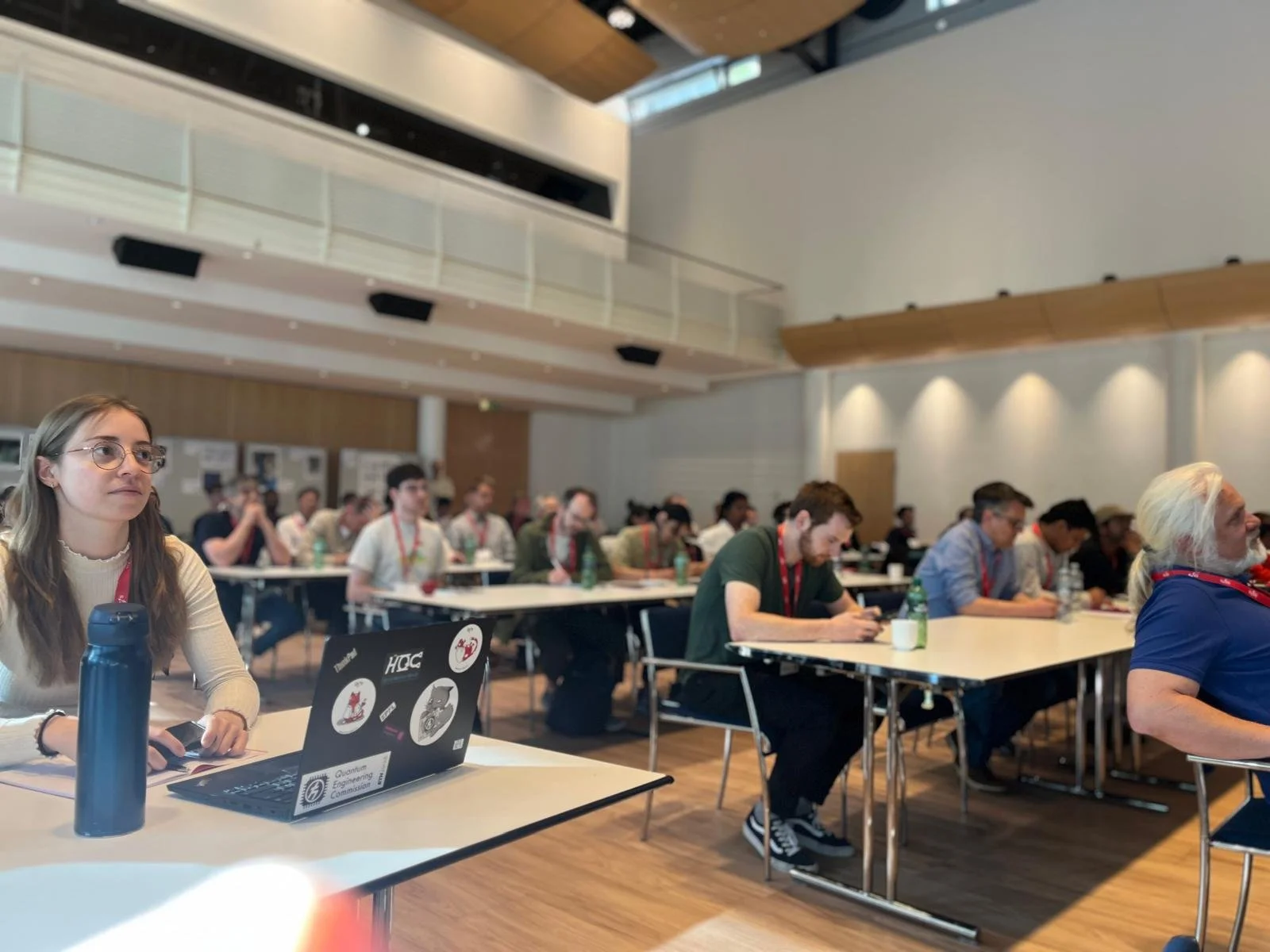
The scientific program spanned three days and featured a broad range of presentations covering experimental, theoretical, and technological aspects of spin-based quantum computing. Researchers shared progress across all major research areas, reflecting the interdisciplinary nature of the NCCR and the rapid advances being made throughout the network.
The core scientific topics included:
Spin qubits and quantum devices
Several talks focused on the development and characterization of spin qubits in silicon and germanium platforms. Presentations explored hole-spin driving mechanisms, flopping-mode spin qubits, spin and valley physics, g-factor engineering, and scalable qubit architectures. Researchers also discussed gate fidelity, exchange interactions, and the impact of correlated noise on quantum operations.
Materials science and device engineering
Advances in materials and fabrication technologies remained a central theme. Presentations highlighted high-quality Ge-Si heterostructures, Al-Ge/SiGe platforms, silicon spikes in germanium wells, and foundry-compatible fabrication processes. Additional talks addressed cryogenic transistors, cryogenic electronics, and three-dimensional integrated semiconductor-superconducting devices. An invited talk by Jacques Van Damme (imec) on foundry-compatible spin qubit fabrication process optimization provided an important industry perspective on how quantum devices can be integrated into established semiconductor manufacturing workflows.
Theory, simulation, and quantum information
Theoretical and computational research was represented through talks on correlated noise in cavity QED systems, quantum simulations of magnetism, machine learning for and with spin qubits, quantum point-contact spectroscopy, and quantum error correction. These contributions illustrated the important role of theory and simulation in guiding the design and operation of spin qubit systems.
Measurements and characterization technologies
Researchers also presented advances in measurement and characterization techniques, including scanning quantum dot microscopy, reflectometry techniques, high-impedance superconducting resonators, quantum paraelectric parametric amplifiers, and edge-magnetoplasmon-based devices.
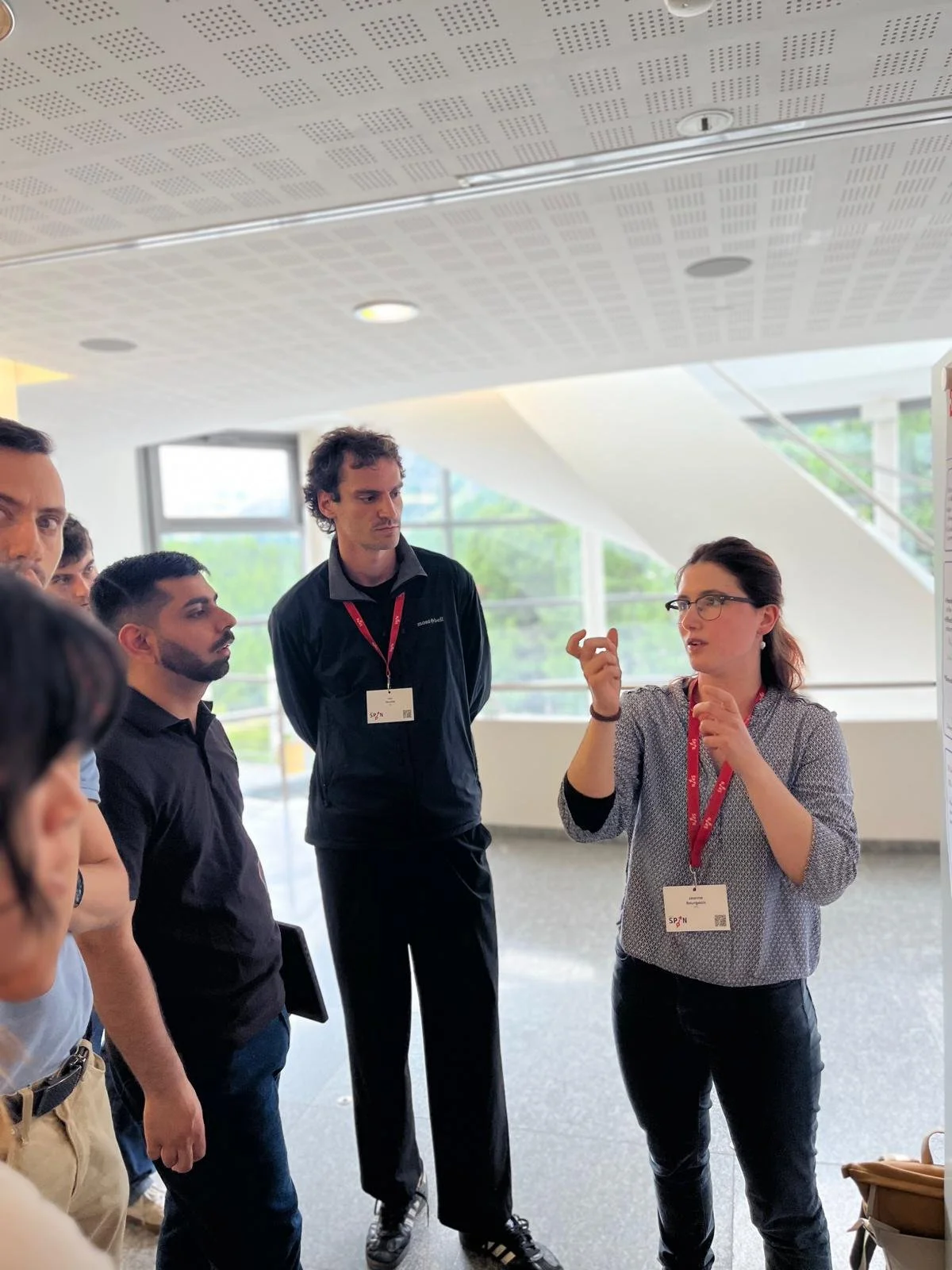
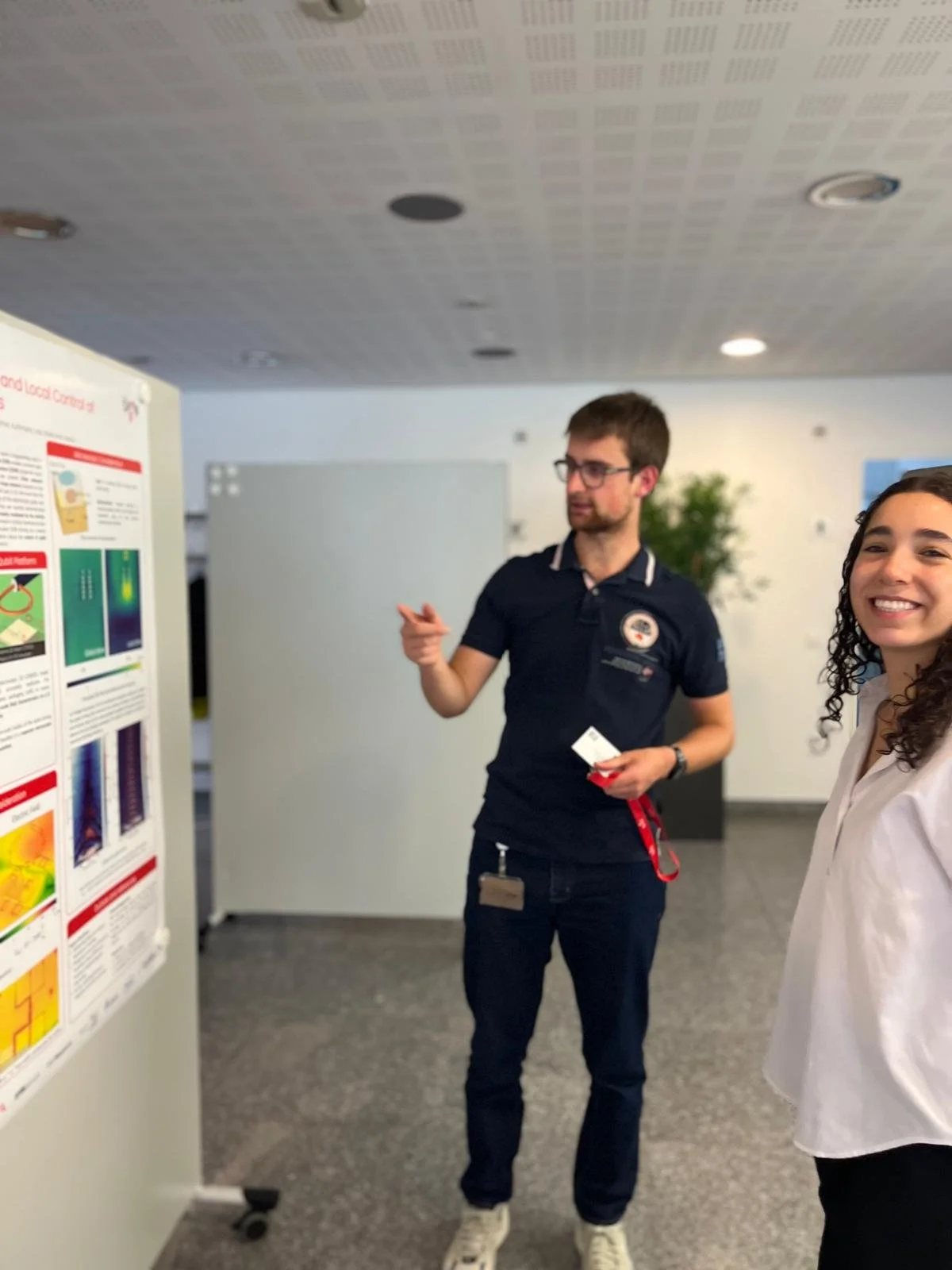
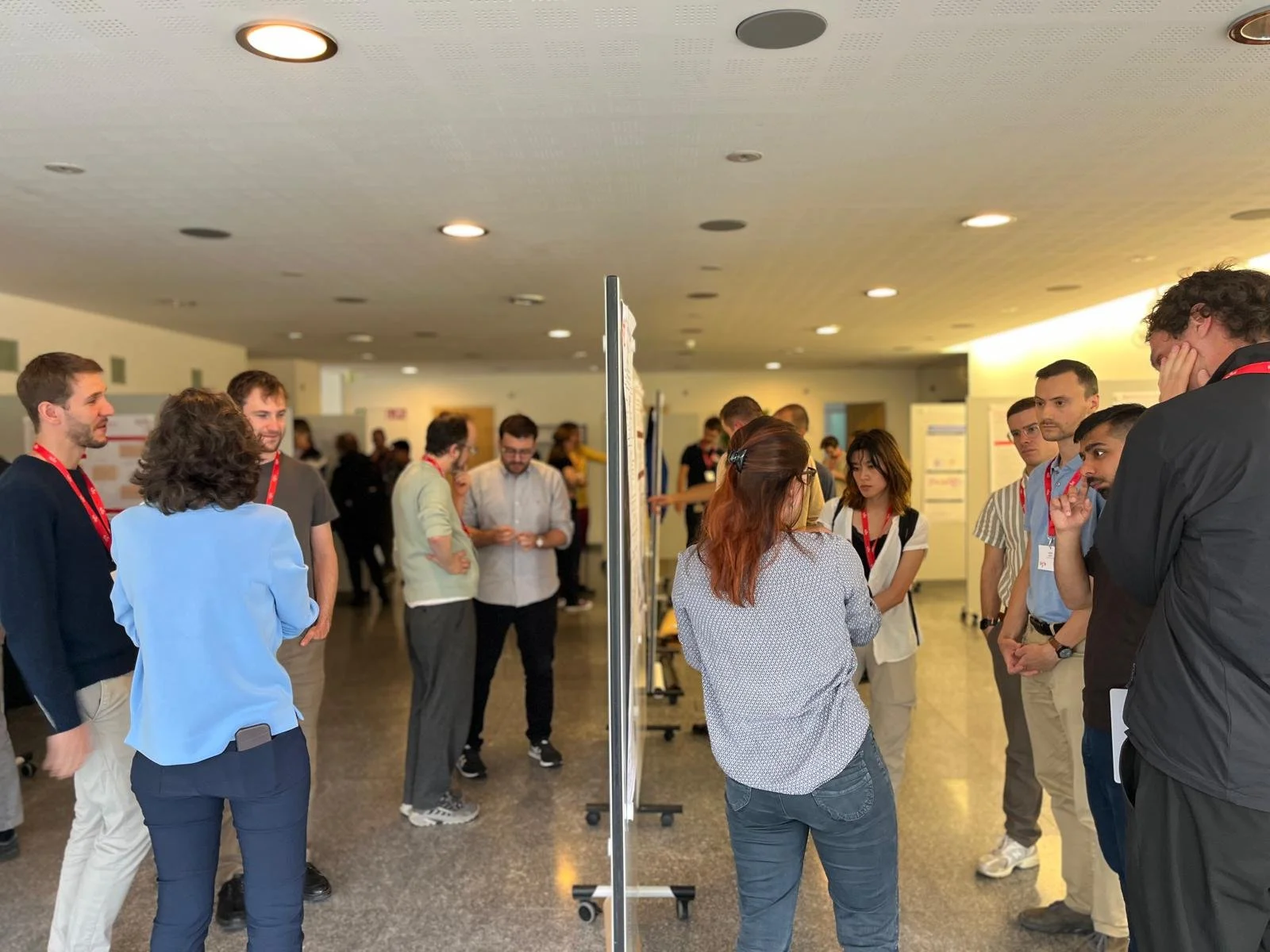
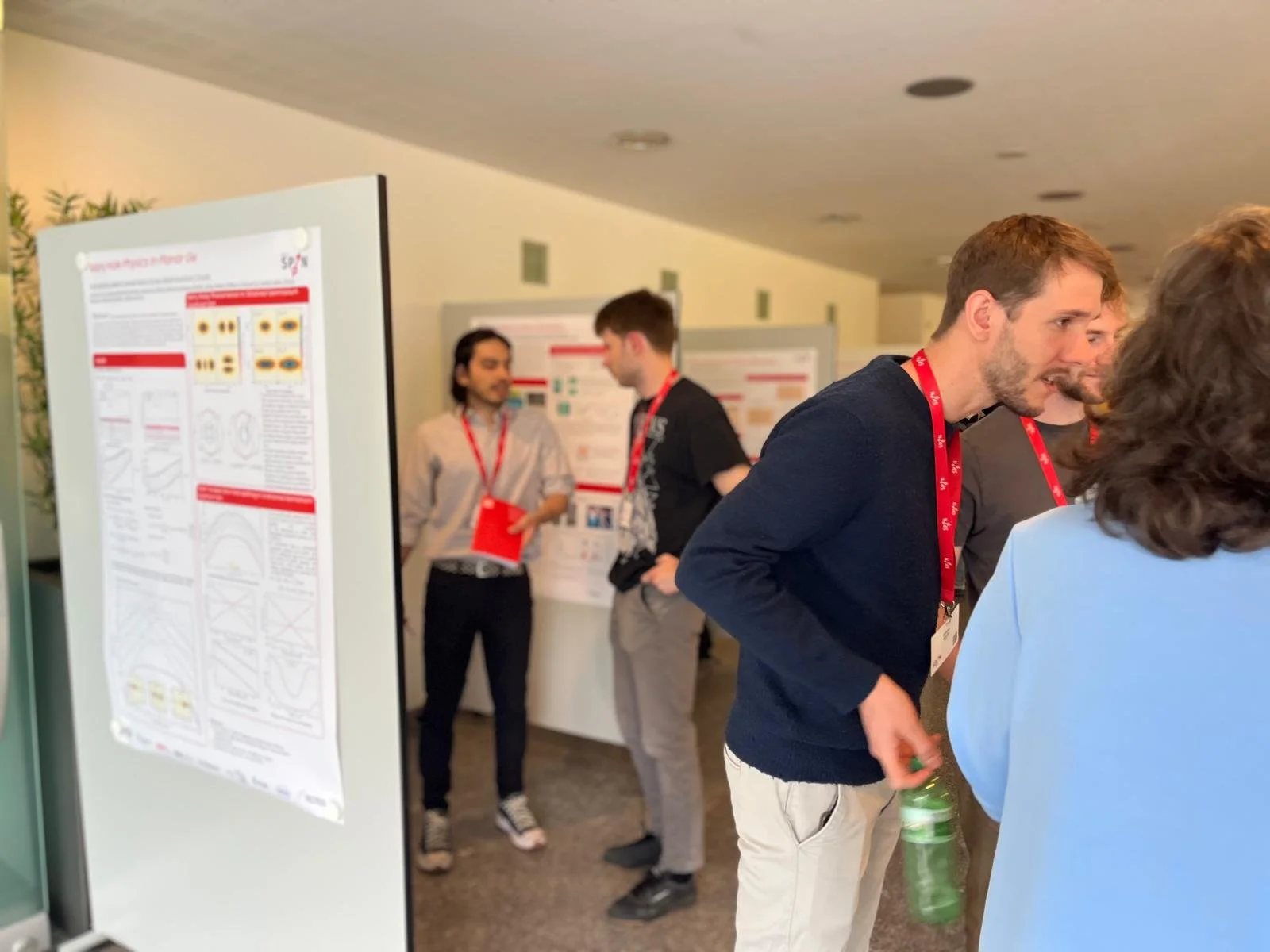
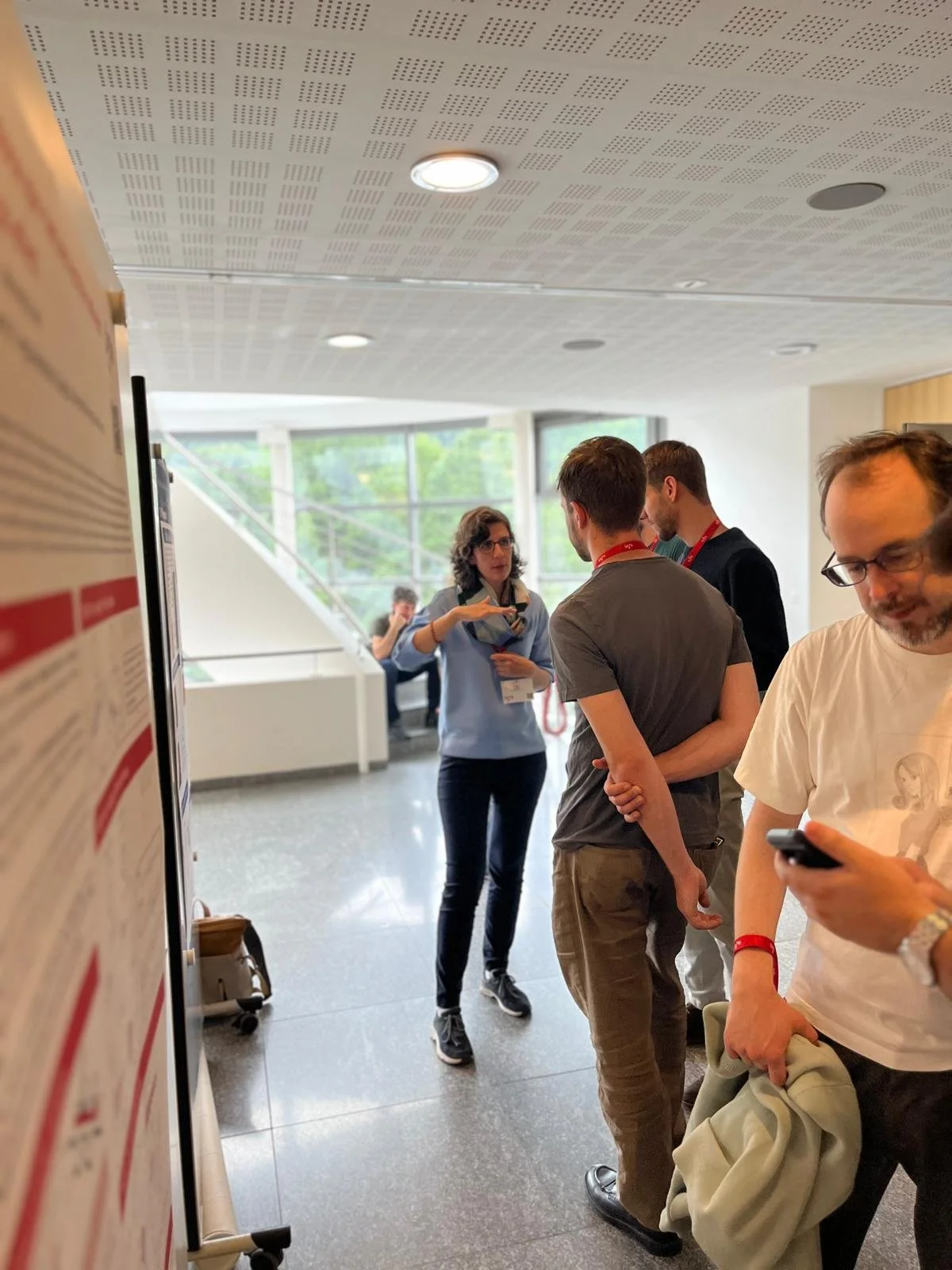
A highlight of the meeting was the poster session, where 30 posters were presented by doctoral and postdoctoral researchers. The session provided valuable opportunities for feedback and encouraged new collaborations in an open and informal setting.
Innovation
Innovation and technology transfer played a particularly prominent role at this year’s Annual Meeting. The innovation session brought together researchers and entrepreneurs, and industry members to discuss pathways from fundamental research to practical quantum technologies.
The session featured innovation pitches from emerging ventures within the NCCR ecosystem. Pasquale Scarlino presented QanovaTech, while Daniel Jetter introduced The SQUID, highlighting the entrepreneurial activities growing out of the network. An industry pitch from Qblox, delivered by Piotr Kot, provided additional insight into the rapidly evolving quantum technology landscape.
The innovation program was complemented by two invited industry talks. Hendrik Bluhm (ARQUE Systems) discussed scalable quantum computing based on electron shuttling and European semiconductor technologies, while Daniël Bouman (GROOVE Quantum) shared perspectives on transforming research outcomes into commercial opportunities. Together, these presentations demonstrated the increasing importance of close collaboration between academia and industry in building the future quantum ecosystem.
The innovation day concluded with a fireside chat for young researchers, moderated by Elena Acinapura and Ilan Bouquet, offering participants the opportunity to engage directly with industry leaders and discuss career paths, entrepreneurship, and the future of quantum technologies.
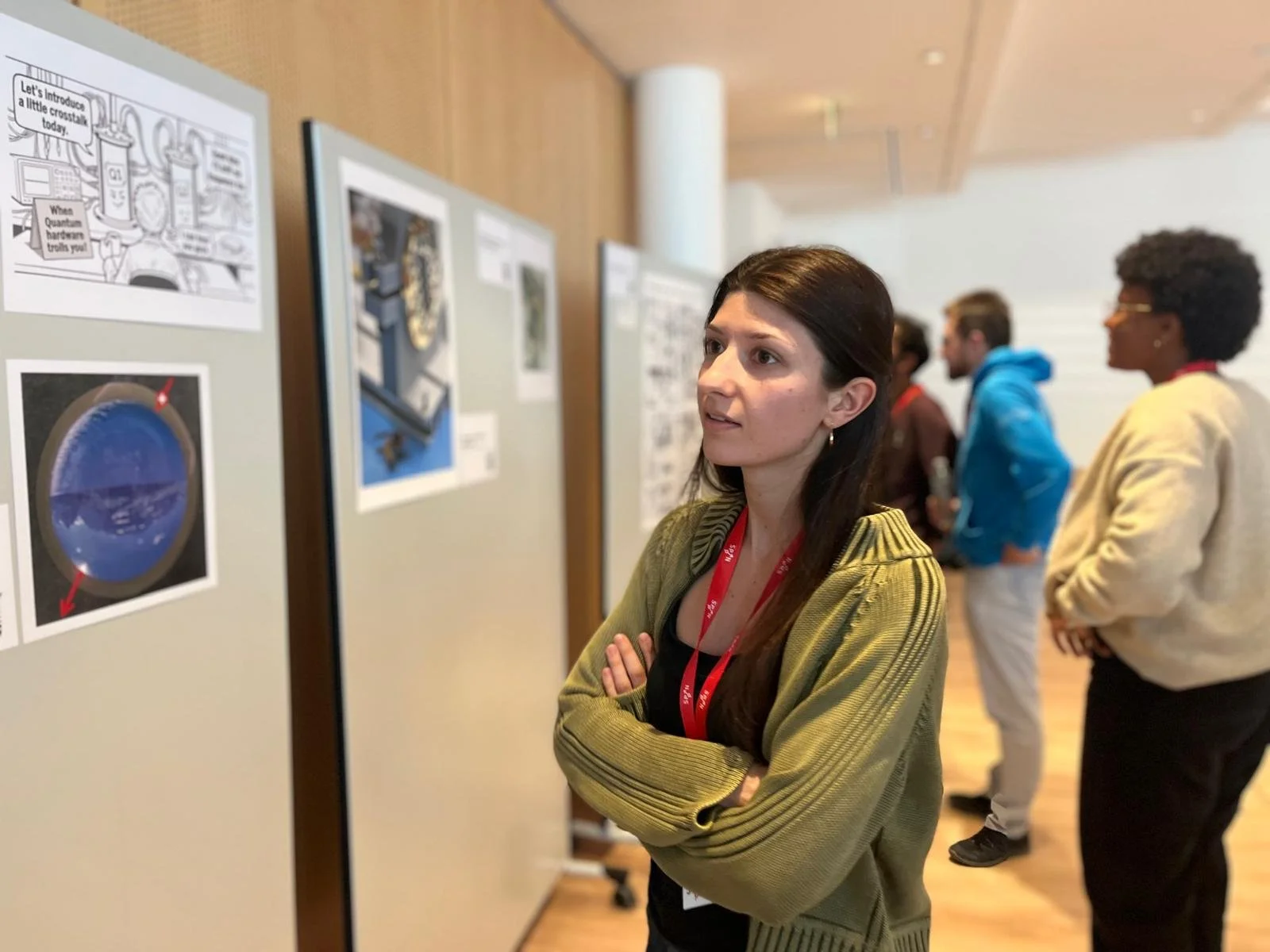
Art & Science contest
The Art & Science Contest once again highlighted the creativity of the NCCR SPIN community and the many ways in which science can inspire artistic expression.
This year's winning entries were:
Scientific Object of Study
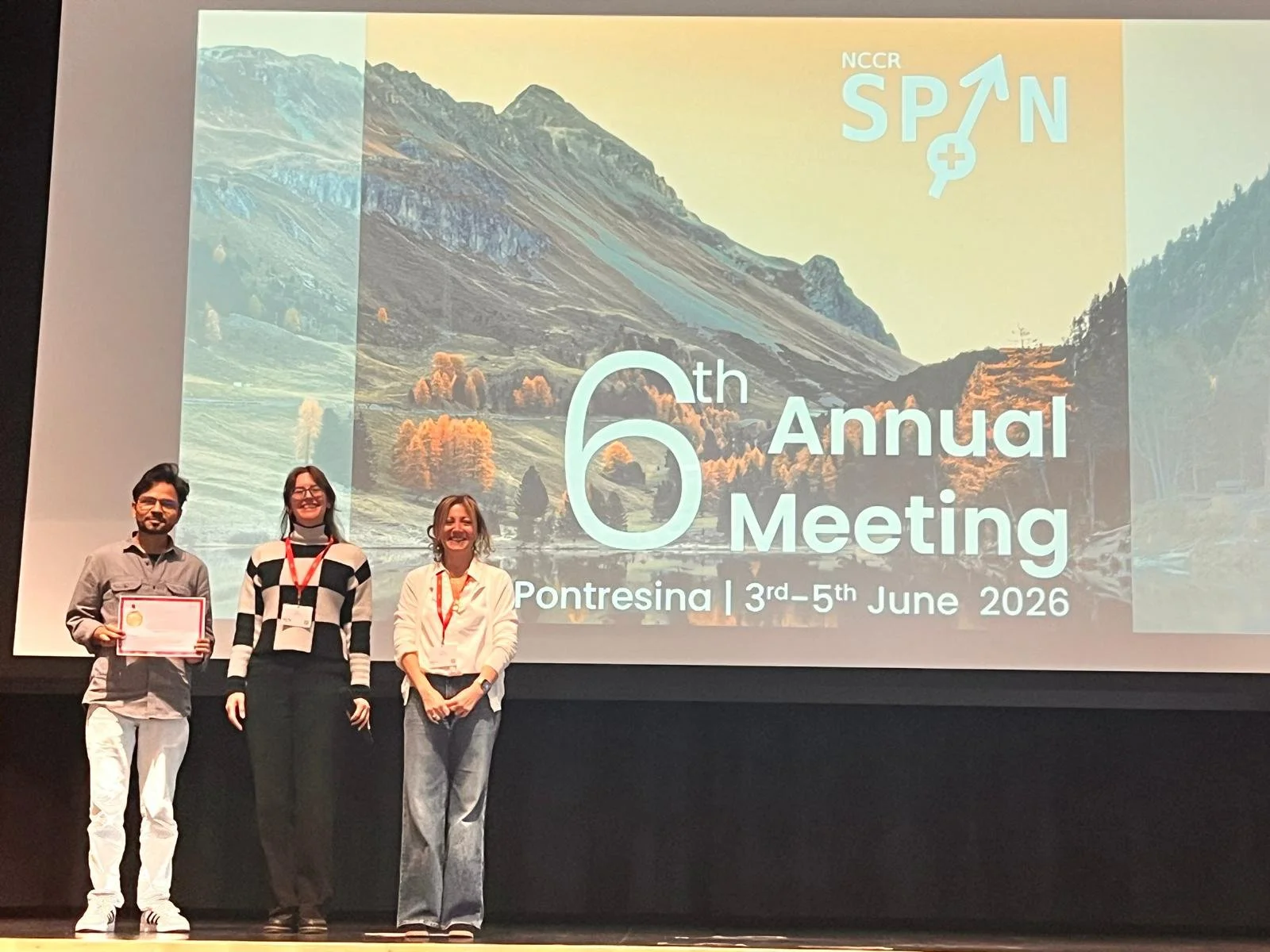
Cleanroom Dreams… by Harshit Choubey and Jibin Niravathedappallil Sunil
People, Places of Science, and Scientific Art
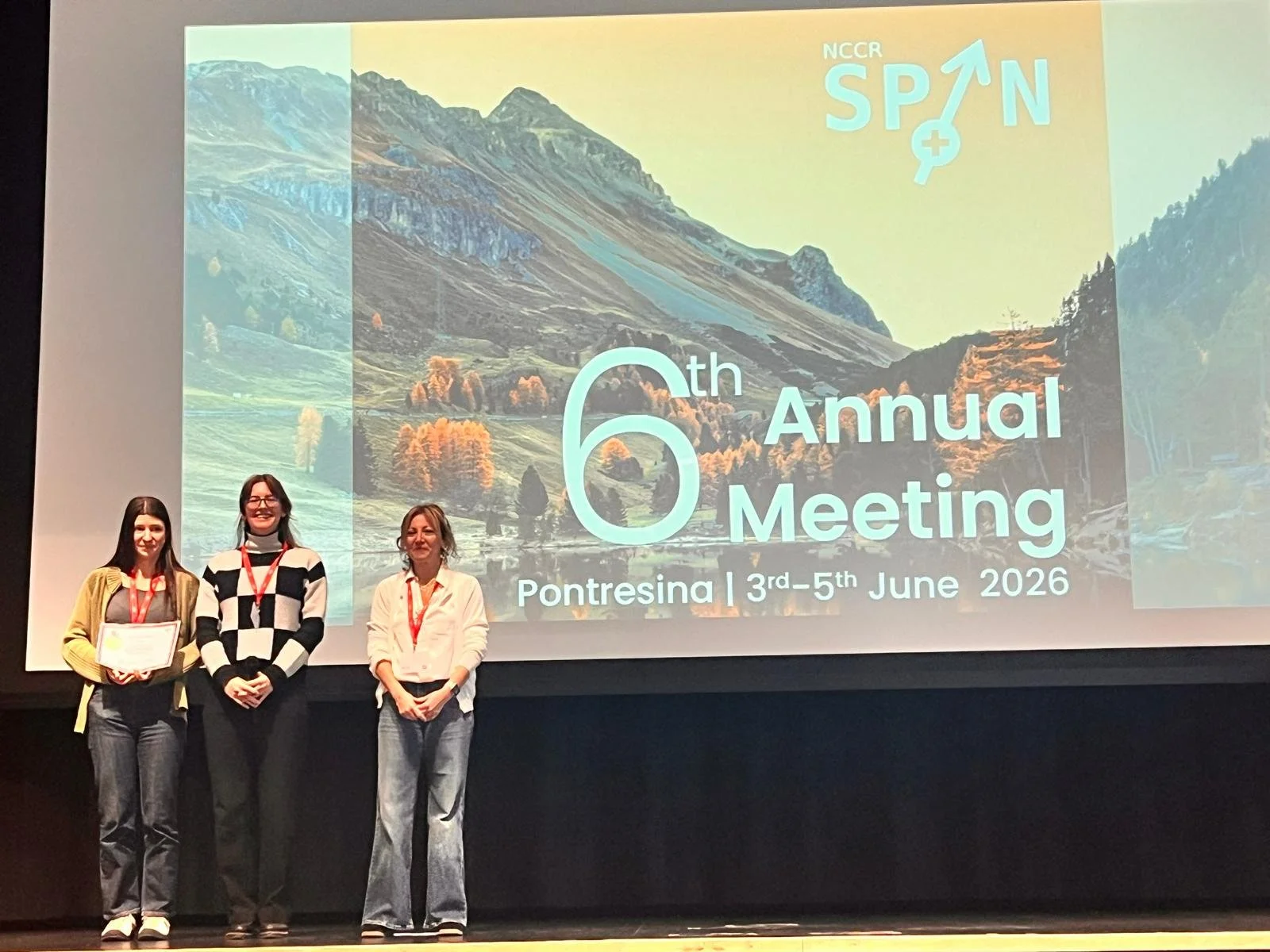
Nanolino and the Ghost Wave by Léa Stan
Visual Representation of a Scientific Concept
Charging Au QD by Akash Gupta
The winning works captured the curiosity and imagination behind the research carried out across the NCCR SPIN network.
YR Excellent Paper Awards
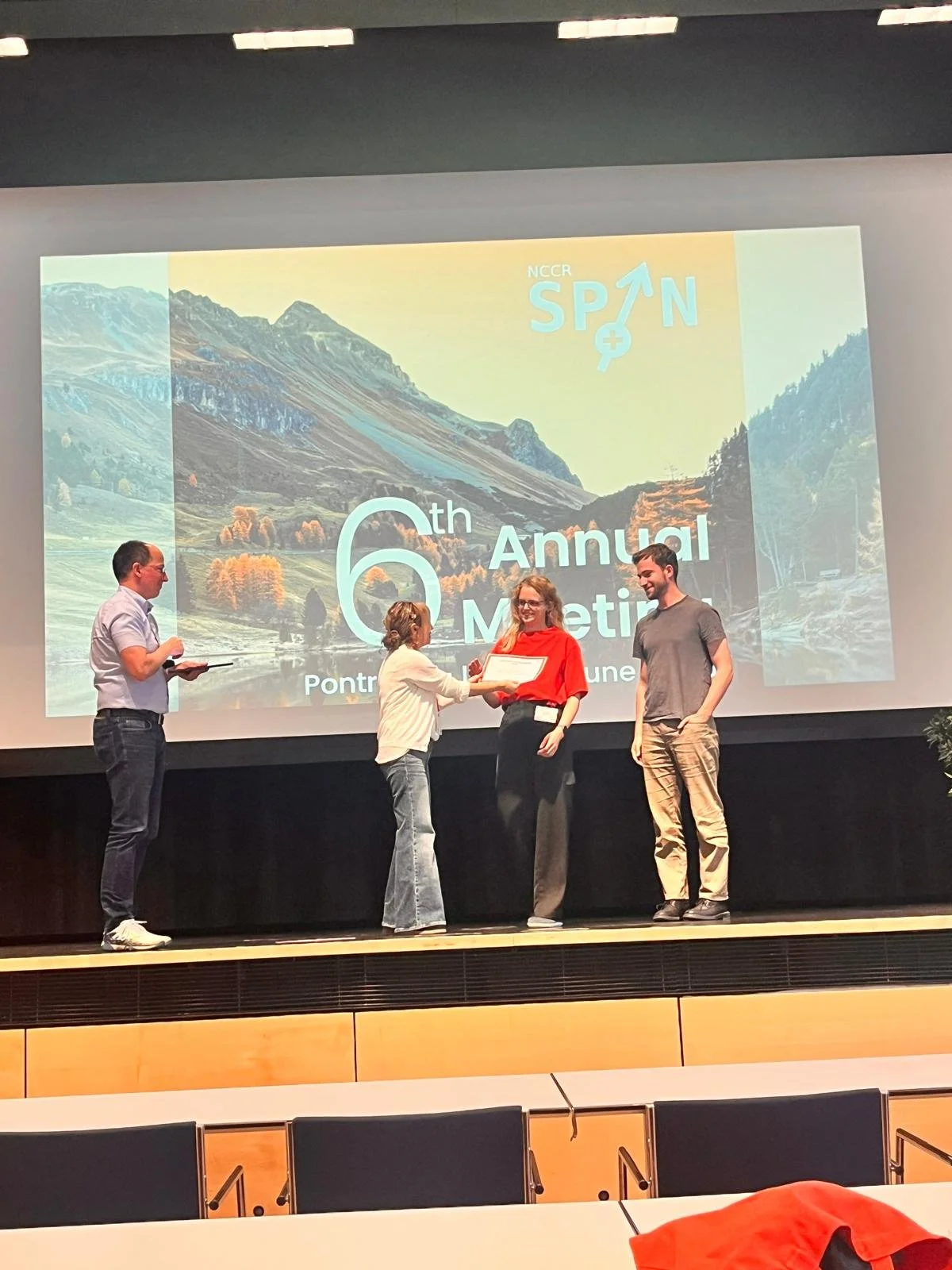
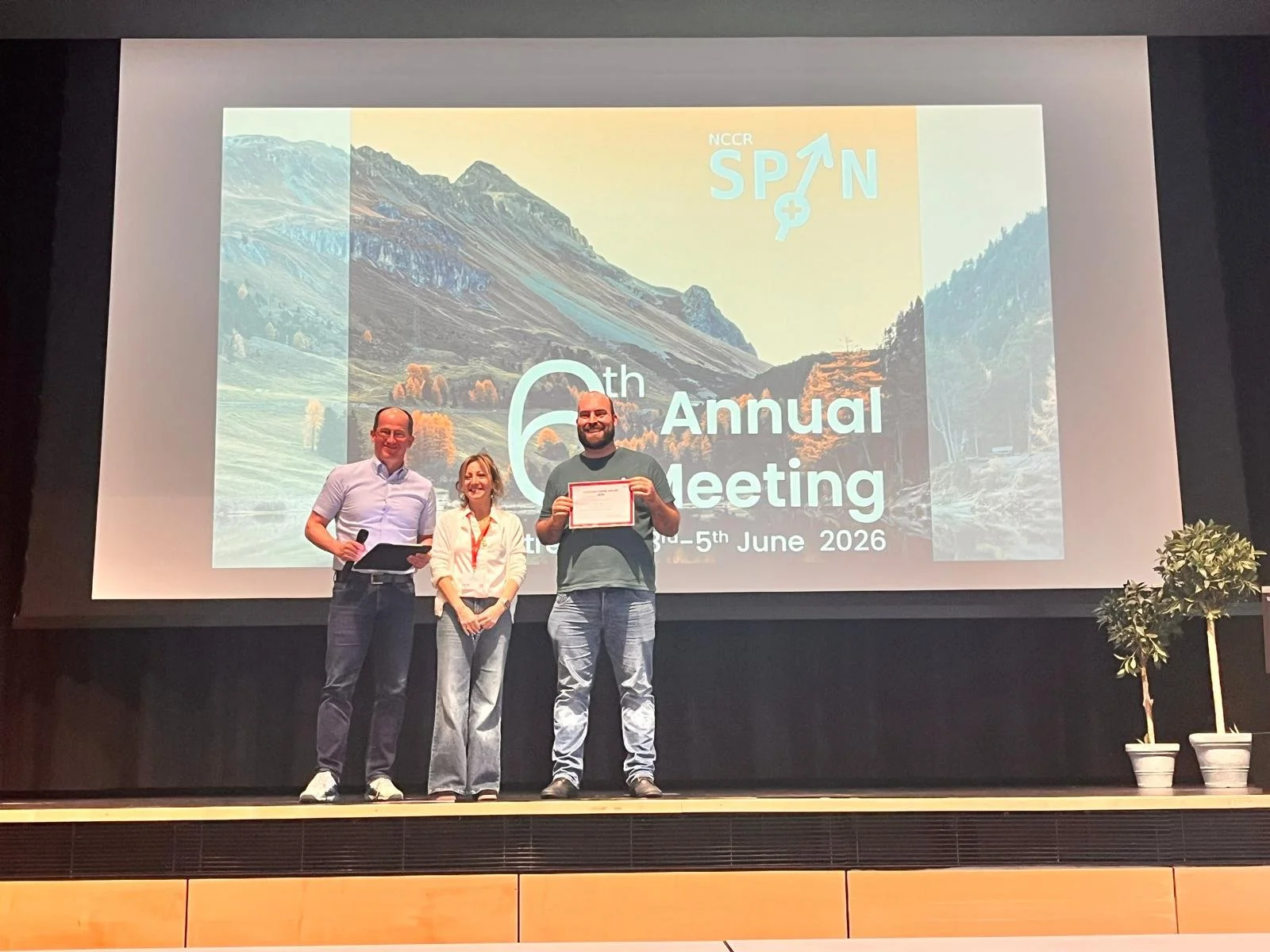
At this year's Annual Meeting, two outstanding scientific contributions were recognized with the Excellent Paper Award, honoring works of NCCR young researchers advancing spin-based quantum computing.
Compromise-free scaling of qubit speed and coherence
Young Researchers present: Rafael Eggli
This work was recognized for its significant contribution to addressing one of the central challenges in quantum computing: simultaneously improving qubit performance and coherence while maintaining scalability.
Identifying and mitigating errors in hole spin qubit readout
Young researchers present: Alexei Orekhov, Inga Seidler, and Lisa Sommer
Paper Authors: Eoin Gerard Kelly, Leonardo Massai, Bence Hetényi, Marta Pita-Vidal, Alexei Orekhov, Cornelius Carlsson, Inga Seidler, Konstantinos Tsoukalas, Lisa Sommer, Michele Aldeghi, Stephen W. Bedell, Stephan Paredes, Felix J. Schupp, Matthias Mergenthaler, Andreas Fuhrer, Gian Salis, Patrick Harvey-Collard.
This work was recognized for its important contribution to understanding and improving spin qubit readout, a critical requirement for scalable quantum computing.